Archive · Family & Generations
Family & Generations 歴代香山と眞葛家
The Makuzu house in Kyoto and Yokohama, from Chōzō to Kōzan IV, plus the Kyoto Miyagawa Kōsai line.
Scaffolded section. Planned content: an individual biography for each generation, signature comparisons, and a family tree diagram.
| Generation | Name | Dates | Notes |
|---|---|---|---|
| Father | Miyagawa (Makuzu) Chōzō 宮川長造 | 1797–1860 | Fourth head of the Chōbei 長兵衛 branch of the Miyagawa house. Pupil of Aoki Mokubei. Built a kiln at Makuzugahara (south of today's Maruyama Park). Received the name “Makuzu” from the Yasui monzeki of Kanshō-ji, and later used “Kōzan”. Box inscriptions read 東山真葛原楽長造 in his mature years and 香山長造 late in life. Works in MFA Boston, the Montreal Museum of Fine Arts and the Ashmolean.[11] |
| — | Miyagawa Chōhei 長平 | 1830–1860 | Chōzō's eldest son; died the same year as his father. Father of Hannosuke. Signed works survive.[11] |
| Kōzan I | Miyagawa Toranosuke 虎之助 | 1842–1916 | Fourth son of Chōzō; founded the Yokohama kiln. See Biography. |
| Kōzan II | Miyagawa Hannosuke 半之助 (Hanzan 半山) | 1859 – 20 April 1940 | Son of Chōhei, adopted by his uncle Kōzan I. Worked as “Miyagawa Hanzan” before taking the name Kōzan II in 1917. Made tea-ceremony wares alongside Makuzu ware, with box inscriptions by Omotesenke XII Seisai. Juror for the Imperial Art Academy exhibition crafts section; committee member of the Nihon Bijutsu Kyōkai. Died of old age at home in Naka-ku, Yokohama.[12][11] resolved: 1940 |
| — | Miyagawa Tsunesuke 宮川恒助 | TBC | Kōzan I's son-in-law; handled kiln administration. Author of the 1929 essay 「初代眞葛宮川香山の作風と其特徴」.[2] |
| Kōzan III | Miyagawa Kuzunosuke 葛之輔 | 1881 – 29 May 1945 | Eldest son of Kōzan II. Took the name in Shōwa 16 (1941; the family site also prints “1944”). Killed in the Great Yokohama Air Raid on 29 May 1945, which destroyed the house, kiln and workshops. The Yokohama Makuzu line effectively ended with him.[11][2] resolved |
| Kōzan IV | Miyagawa Tomonosuke 智之助 | 1884–1959 | Second son of Kōzan II. Escaped the raid and took the name after the war. Tried to revive the kiln with help from relatives, including Kōsai IV, but did not succeed.[11][2] |
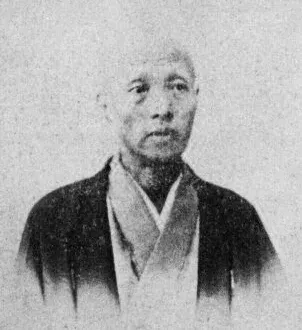
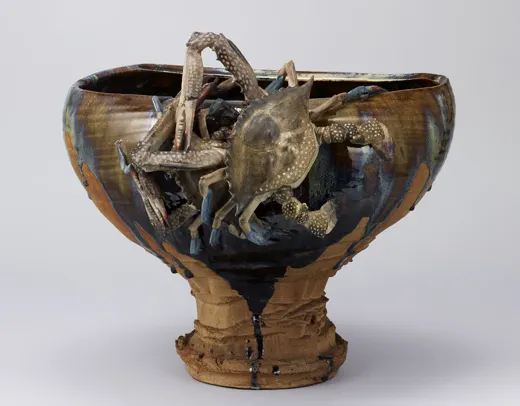
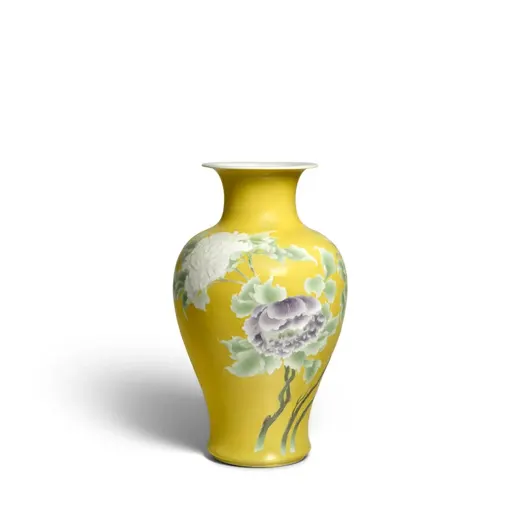


Works of the Yokohama house, from Kōzan I’s high relief to porcelain catalogued as later generations:

Photo © Bonhams, via lot page; archival reference, not openly licensed

Photo © Bonhams, via lot page; archival reference, not openly licensed

Photo © Bonhams, via lot page; archival reference, not openly licensed

Photo © Hutchinson Scott Auctioneers, via lot page; archival reference, not openly licensed
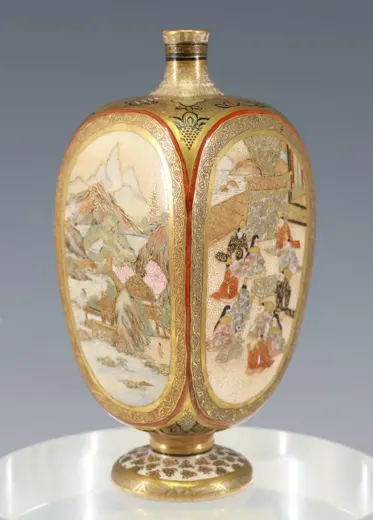
Photo © Alderfer Auction, via lot page; archival reference, not openly licensed
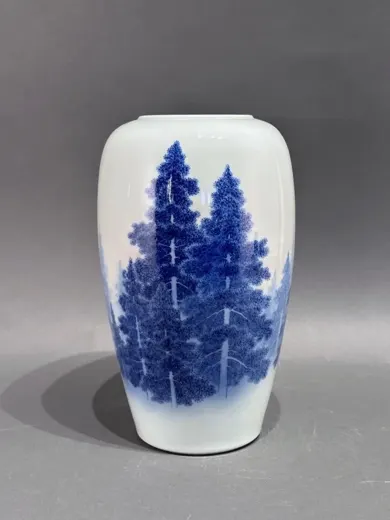
Photo © Neue Auctions, via lot page; archival reference, not openly licensed
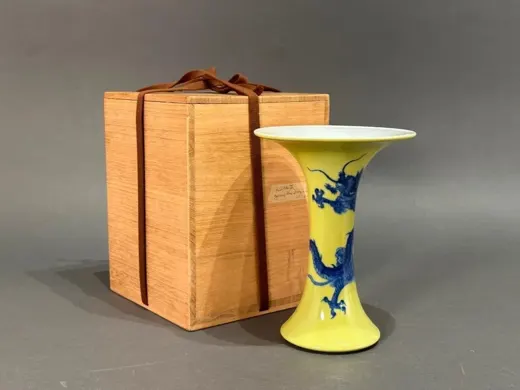
Photo © Neue Auctions, via lot page; archival reference, not openly licensed
The Kyoto line: Miyagawa Kōsai 宮川香齋京都真葛 治兵衛家
The Kōsai house is the senior Jihei 治兵衛 branch of the Miyagawa family. It descends from Miyagawa Kohei Masakazu, who came to Kyoto from Ōmi in the Jōkyō era (1684–87). Chōzō's Chōbei branch split off from this house.[11]
| Head | Dates | Notes |
|---|---|---|
| Kōsai I, Senkon 赤鯶香齋 | 1819–1865 | Turned the family's ceramic repair business (Rakuya) into a pottery. Used marks such as 香齋精製 and 大日本香齋製; many works in the National Museums Scotland. |
| Kōsai II, Zen'ō 善翁香齋 | 1846–1922 | Born Nakamura Kumajirō and adopted by his uncle Kōsai I. Trained at Chōzō's kiln alongside Chōhei and Toranosuke (Kōzan I). Became head in 1865; friend of Tomioka Tessai. |
| Kōsai III, Kōyo 光誉 | 1894–1919 | Shūzō; died young. |
| Kōsai IV, Eiyo 永誉 | 1897–1987 | From about 1934 used the name “Makuzu” jointly with the Yokohama Kōzan house, as its sibling kiln. |
| Kōsai V, Kan'yo 寛誉 | 1922–2016 | Published a 1988 study of Chōzō and the family lineage (Mainichi Shimbun). |
| Kōsai VI (now Jihei) | b. 1944 | Succeeded in 2002 and retired in 2024; his son Shin'ichi heads the house as Kōsai VII. |
Both Wikipedias are partly right about Kōsai. English Wikipedia (citing Pollard) calls Zen'ō Kōsai a worker at Chōzō's kiln; the family history confirms he trained there. Japanese Wikipedia says the Kōsai house is a branch that split off before Chōzō; the family history makes it the senior line from which Chōzō's branch split.[11][1][2]
Sources典拠
- Wikipedia (English), “Makuzu Kōzan”, en.wikipedia.org, accessed 23 Oct 2026.
- Wikipedia (日本語)「宮川香山」, ja.wikipedia.org, accessed 23 Oct 2026.
- Moyra Clare Pollard, Master Potter of Meiji Japan: Makuzu Kōzan (1842–1916) and His Workshop, Oxford University Press, 2002. ISBN 978-0-19-925255-8. (Cited via Wikipedia page references; not yet consulted directly.)
- 真葛 宮川香齋 (Makuzu Miyagawa Kōsai house, Kyoto), 「真葛の歴史・歴代当主」, makuzu-yaki.jp/ja/history, accessed 23 Oct 2026. Family-published source.
- 東京文化財研究所 東文研アーカイブ「宮川香山」(obituary of Kōzan II, d. 20 Apr 1940, from 『日本美術年鑑』), tobunken.go.jp.